Instant Tire Size Converter and Conversion Calculator
Convert tire sizes between metric, standard and inch formats. Learn how section width, aspect ratio and rim diameter combine into overall diameter.

Contents
- What a tire size converter does
- Reading the numbers before you convert
- Converting metric sizes to inches
- Converting inch and flotation sizes to metric
- Units: mm to inches in tire sizes
- The overall diameter calculation
- Metric to standard: matching sizes across formats
- What a converter cannot tell you
- Tire size conversion questions
- How do you convert tire sizes between metric and inches?
- What is an instant tire size converter?
- How do you convert a metric tire size to inches by hand?
- How do you find the metric equivalent of an inch tire size?
- Does a tire size conversion calculator confirm that a tire fits?
- Why do metric and inch tire sizes never match exactly?
A tire size converter turns the markings on a sidewall into numbers you can compare, and it works in both directions between metric and inch formats. The conversion itself is arithmetic: section width, aspect ratio and rim diameter become sidewall height, overall diameter and width in the unit you choose. An instant calculator does that arithmetic for you and shows the two sizes side by side.
- Metric sizes and inch or flotation sizes describe the same three dimensions in different units and formats.
- Section width and rim diameter convert directly between millimeters and inches; aspect ratio does not convert, it only scales sidewall height.
- Overall diameter equals rim diameter plus twice the sidewall height, and it is the number to compare when changing sizes.
- A converter gives geometry only; load index, speed rating and clearance still need a separate check.
- Reading the sidewall first tells you which format you are converting from.
What a tire size converter does
A tire size converter is a calculator that translates one tire size format into another and returns the dimensions in the unit you pick. The tool reads the numbers you type, applies the size rules, and reports width, sidewall height and overall diameter. Nothing about the tire changes; only the way its dimensions are written changes.
The instant tire size converter exists because tire markings use two vocabularies. Metric sizes, often called P-metric when they carry a P prefix, list width in millimeters and sidewall height as a percentage of that width. Inch and flotation sizes list the same three dimensions in inches, with the width and diameter written as whole numbers.
A tire size conversion calculator is useful when you shop across those two vocabularies, read a foreign listing, or check whether a size you found matches the one on your vehicle. The output is geometric and descriptive, and it does not certify that a tire fits a wheel or a vehicle. Fitment checks come after the conversion.
Reading the numbers before you convert
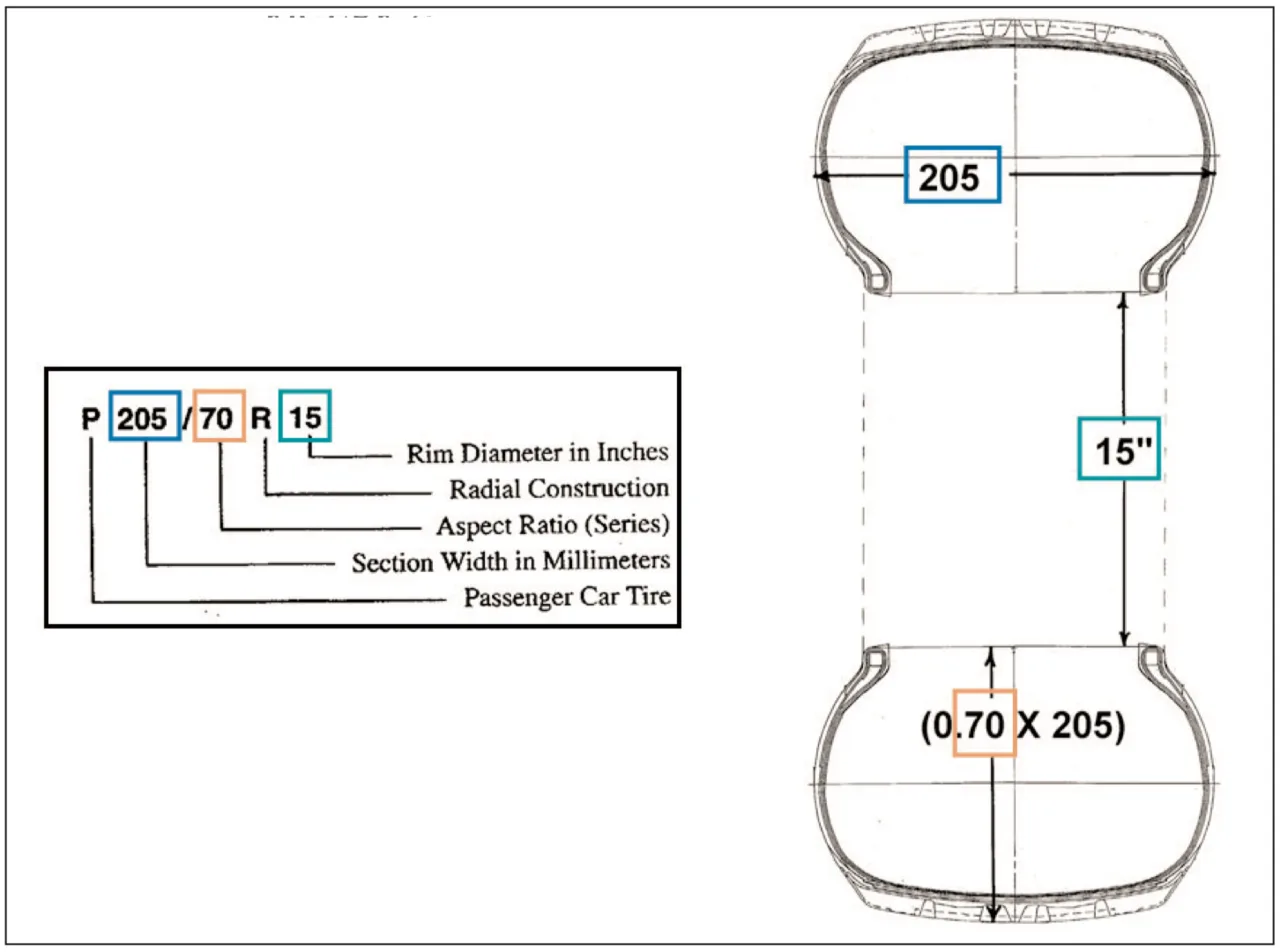
Every conversion starts with the sidewall, because the format of the marking tells you which numbers you already hold. A metric tire size such as 225/45R17 gives section width in millimeters, aspect ratio as a percentage, and rim diameter in inches. An inch size such as 33x12.50R17 gives overall diameter, section width and rim diameter, all in inches.
Section width is the widest point of the inflated tire, measured across the sidewalls without load. The aspect ratio is the sidewall height expressed as a percentage of section width, so it is a ratio and not a length. Rim diameter is the bead seat diameter of the wheel the tire mounts on.
Sidewall numbers in a metric size are easy to misread, since the second figure is a percentage rather than a measurement. A 45 in 225/45R17 means the sidewall is forty-five percent of 225 millimeters, which works out to about 101 millimeters. Treating that 45 as millimeters or inches gives a wrong overall diameter and a wrong comparison.
Converting metric sizes to inches
Converting a metric tire size to inches means turning millimeters into inches for width and sidewall height, then adding the rim. Divide a millimeter figure by 25.4 to get inches, because one inch equals 25.4 millimeters. The rim diameter is already in inches on a metric size, so it needs no conversion.
Take 225/45R17 as a worked example. Section width of 225 millimeters becomes about 8.86 inches. Sidewall height of 45 percent of 225 is about 101 millimeters, or about 3.99 inches. Overall diameter is 17 inches of rim plus two sidewalls of 3.99 inches, which gives about 24.97 inches.
A tire size converter to inches returns those three figures so you can quote the tire in the inch format. The metric equivalent stays the same tire, and the inch numbers are rounded for display. Rounding is why a converter may show a diameter a fraction off from a hand calculation.
Converting inch and flotation sizes to metric
Converting an inch tire size to metric means going the other way: turn width and diameter into millimeters, then derive an aspect ratio. Multiply inches by 25.4 for the millimeter figure. The aspect ratio is the sidewall height divided by the section width, expressed as a percentage.
For 33x12.50R17, section width of 12.50 inches becomes 317.5 millimeters, which is written as 318 in a metric size. Overall diameter of 33 inches minus 17 inches of rim leaves 16 inches of combined sidewall, so each sidewall is 8 inches, or about 203 millimeters. Dividing 203 by 317.5 gives about 64 percent, so the metric equivalent sits near 318/64R17.
That metric equivalent is an approximation, because production metric sizes come in steps and the percentage is rounded. A metric to standard tire conversion calculator performs the same steps in reverse and reports both figures. Expect the closest published metric size rather than an exact match to the inch dimensions.
Units: mm to inches in tire sizes
Tire size converter mm to inches work rests on a single fixed relationship, with 25.4 millimeters in one inch. Width and sidewall height convert with that factor in either direction. Rim diameter does not need it when the size is already metric, because rim diameter is written in inches in both formats.
The sidewall number is the figure that trips people up in unit conversion. A metric sidewall figure is a percentage, so it has no millimeter or inch value until you multiply it by section width. Convert the resulting sidewall height, not the percentage itself, when you move between units.
Inch to metric tire size conversion follows the same factor, applied to width and diameter before the aspect ratio is calculated. Keeping the factor consistent avoids errors when you compare tires from different listings. A tire size conversion calculator inches option simply displays the same geometry with inch labels.
The overall diameter calculation
Overall diameter is the measurement that decides whether a tire keeps your speedometer and clearance in the same place. The calculation is rim diameter plus twice the sidewall height, with all terms in the same unit. A tire size comparison calculator leans on that single figure, because diameter drives gearing and speedometer readings.
Section width and sidewall height feed the same calculation. Multiplying section width by the aspect ratio gives one sidewall, and doubling it accounts for both sides of the tire. Adding the rim diameter closes the equation, so any change in width, ratio or rim moves the diameter.
An overall diameter comparison between two sizes shows how far apart they sit and in which direction. A larger diameter turns slower at the same road speed, which affects the speedometer reading. The converter reports the geometry, and the effect on the vehicle follows from that geometry.
Metric to standard: matching sizes across formats
A metric to standard tire conversion calculator pairs a metric size with the inch size closest to it. The match is rarely exact, because each format rounds its dimensions its own way. Two tires can differ by a small margin in width or diameter and still be sold as different sizes.
When matching, compare overall diameter first, then section width, and treat the aspect ratio as a result of the other two. A small diameter difference changes the speedometer reading, while a small width difference changes clearance at the strut and fender. Both matter, and they matter in different ways.
A tire size conversion chart or table makes the pairing readable at a glance, with metric sizes in one column and inch sizes in another. Standard to metric tire size lookup works the same way in reverse. Use the chart to shortlist candidates, then confirm each one against the wheel and the vehicle.
What a converter cannot tell you
A tire size converter returns geometry, and geometry is only one part of fitment. Load index and speed rating sit in the size string but are not part of the dimension math. A converted size that matches in diameter can still carry the wrong load capacity for the vehicle.
Wheel width, offset and clearance are separate checks that no size converter performs. Section width tells you how wide the tire is, and the wheel still has to accept that width within the rim's approved range. Clearance at the brakes, suspension and body needs a physical check on the vehicle.
Mounting and balancing a tire is a job for a trained technician with the right equipment. A calculator is a planning tool, and a professional should confirm the final fitment before the tire goes on the wheel. Treat converter output as a starting point for that conversation.
Tire size conversion questions
How do you convert tire sizes between metric and inches?
You convert tire sizes by turning millimeters into inches or inches into millimeters with the factor of 25.4, then rebuilding the size. Metric width and sidewall height convert to inches directly, and the rim diameter is already in inches. Inch sizes convert to millimeters for width and diameter, and the aspect ratio is then calculated from sidewall height.
What is an instant tire size converter?
An instant tire size converter is a tool that returns the dimensions of a tire as soon as you enter its size. It reads the marking, applies the size rules, and reports section width, sidewall height and overall diameter in the format you choose. The result is instant because the arithmetic is fixed and needs no lookup.
How do you convert a metric tire size to inches by hand?
Divide the section width in millimeters by 25.4 to get width in inches. Multiply the width by the aspect ratio to get sidewall height in millimeters, then divide that by 25.4. Double the sidewall height in inches and add the rim diameter to get overall diameter.
How do you find the metric equivalent of an inch tire size?
Multiply the inch width and diameter by 25.4 to get millimeters. Subtract the rim diameter from overall diameter, halve the result for one sidewall, and divide it by the section width. Multiplying that result by 100 gives the aspect ratio, and the nearest published metric size is the equivalent.
Does a tire size conversion calculator confirm that a tire fits?
No, a tire size conversion calculator confirms dimensions only. Load index, speed rating, wheel width, offset and clearance are separate checks that the calculator does not perform. A trained technician should confirm fitment before the tire is mounted.
Why do metric and inch tire sizes never match exactly?
Metric and inch tire sizes never match exactly because each format rounds its figures and production sizes come in steps. The aspect ratio in a metric size is a rounded percentage, and inch sizes are written in whole or half inches. The closest equivalent is a near match, not an identical size.