Tire Size Comparison Guide
Learn how to read sidewall numbers, convert metric and inch sizes, and compare overall diameter, width and fitment before you change a tire size.
Contents
- Reading the numbers on the sidewall
- From code to real dimensions
- Metric, inch and flotation formats
- Comparing width, sidewall and diameter
- Fitment and clearance checks
- What a size change does to the car
- A simple comparison checklist
- Beginners, experts and tool choices
- Tire Size Comparison Questions
- How do I compare tire sizes using the numbers on the sidewall?
- What is the difference between metric and inch tire sizes?
- Can I change tire size without affecting the speedometer?
- How do I know if a different tire size will fit my car?
- Do I need to match load index and speed rating when comparing sizes?
- Is a tire size comparison chart accurate for every brand?
A tire size comparison starts with the sidewall code, which gives width, aspect ratio and rim diameter in one line. From those three numbers you can work out section width, sidewall height, overall diameter and rolling circumference for any tire. Comparing two sizes means comparing those calculated dimensions, not just the numbers printed on the side.
- Read the sidewall code as width, aspect ratio and rim diameter before comparing anything.
- Overall diameter comes from rim diameter plus two sidewall heights, and it drives speedometer accuracy.
- A wider tire or a larger rim changes clearance and load capacity, so check fitment before buying.
- Metric and inch sizes describe the same dimensions in different units, so convert before you compare.
- Load index and speed rating must meet or exceed the vehicle's requirement whatever size you pick.
Reading the numbers on the sidewall
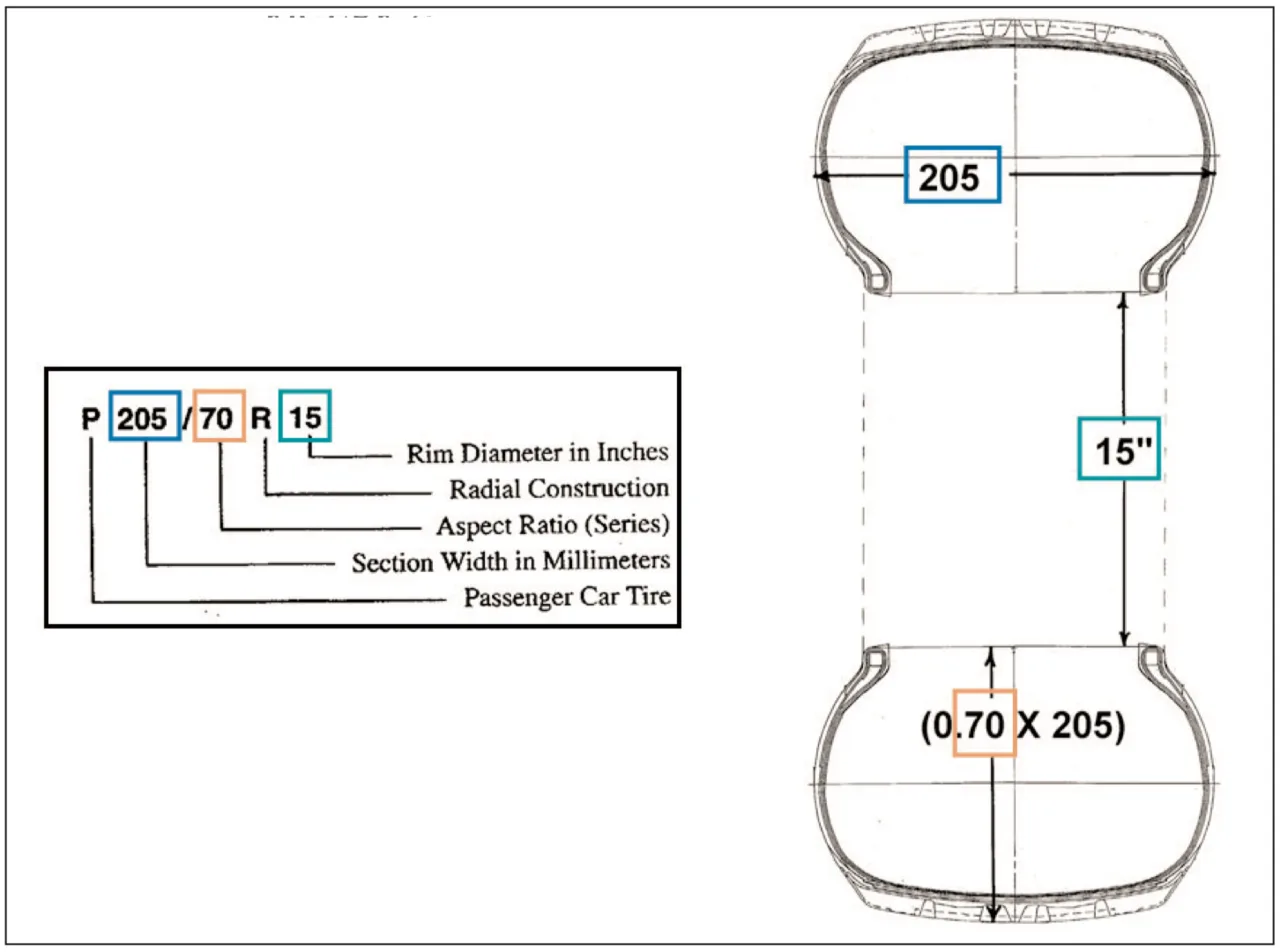
Every tire size comparison begins with the sidewall size code, a string such as 225/45R17. The first number is the section width in millimeters, measured across the widest part of the inflated tire. After the slash comes the aspect ratio, a percentage of that width that gives the sidewall height.
The letter R shows radial construction, and the number after it is the rim diameter in inches. A size written as 225/45R17 therefore means a 225 mm wide tire with a sidewall equal to 45 percent of that width, mounted on a 17 inch rim. Sidewall markings also carry a load index and a speed rating after the size code.
Light truck tires may use a P-metric or LT prefix, and both follow the same width, aspect ratio and rim pattern. The prefix tells you which load range and service category the tire was built for. A size comparison should keep that prefix in view, because a P-metric and an LT tire of the same numbers are not interchangeable in every application.
From code to real dimensions
Sidewall height in millimeters equals the section width multiplied by the aspect ratio, then divided by one hundred. A 225/45R17 tire has a sidewall of about 101 mm, which converts to roughly 4 inches. Section width converts the same way, with 25.4 millimeters to one inch.
Overall diameter is the rim diameter plus two sidewall heights, because the tire sits on both sides of the wheel. For the 225/45R17 example, the rim is 431.8 mm and the two sidewalls add about 203 mm, giving an overall diameter near 634 mm or about 25 inches. Overall height is the same measurement viewed from the ground to the top of the tire.
Rolling circumference follows from overall diameter multiplied by pi, and it sets how far the tire travels in one revolution. Two sizes with the same overall diameter share a rolling circumference within a small tolerance. A size change that shifts overall diameter also shifts the relationship between road speed and indicated speed.
Metric, inch and flotation formats
Metric sizing dominates passenger car tires, and it is the width, aspect ratio and rim format described above. Inch sizes appear on older and specialty tires and state overall diameter and width in inches, such as 31x10.5R15. Flotation sizes add a letter code for light truck use and describe the same two dimensions differently.
Metric and inch size conversion is the step beginners miss, because the units are not directly visible on the sidewall. Convert the metric size to inches first, then set it beside the inch size. A metric tire near 31 inches in overall diameter and 10.5 inches in width is comparable to a 31x10.5 size, though exact figures can differ by a few millimeters.
Standard tables list these conversions for a range of sizes, and a tire size comparison chart uses the same arithmetic. Tables are a shortcut, and the calculated numbers are what you actually compare. Where a table and your own calculation disagree, trust the calculation and check the tire's published dimensions.
Comparing width, sidewall and diameter
Tire dimension comparison comes down to four figures: section width, sidewall height, overall diameter and rim diameter. A size with the same rim diameter but a higher aspect ratio gains sidewall height and overall diameter. A size with the same aspect ratio but more width gains both width and sidewall height.
Width affects how the tire sits on the rim and how much space it needs inside the wheel well. Sidewall height affects ride quality and the look of the tire against the wheel. Overall diameter affects ground clearance, gearing and the speedometer, so it is the figure to check first when changing size.
Two tires can share an overall diameter and still differ in width and sidewall proportions. Comparing tire size dimensions means comparing the whole set rather than one number. A side-by-side size comparison of all four figures shows which measurements change and by how much.
Fitment and clearance checks
Tire size comparison for fitment asks whether a candidate size physically fits the vehicle, not only whether the numbers are close. The tire must clear the suspension, brake calipers and inner fender at full steering lock and full suspension travel. Rim width must also fall within the range the tire maker lists for that size.
Overall width and diameter both drive clearance, and offset of the wheel moves the tire in or out relative to the body. A wider tire or a taller sidewall can contact a strut or a fender liner that the original size cleared by a small margin. A fitment check on the vehicle, with the suspension loaded, is the only way to confirm clearance.
Fitment tolerance means accepting a small difference in overall diameter while keeping enough room for suspension movement. Anything beyond a modest change deserves a professional inspection before you buy. A trained technician can measure clearance and confirm the rim and tire combination suits the vehicle.
What a size change does to the car
Tire size difference changes more than appearance, because a taller tire travels further per revolution than a shorter one. That difference shows up as speedometer error, where the indicated speed drifts from actual road speed. A shorter tire reads faster than actual speed, and a taller tire reads slower.
Load index and speed rating matter as much as the dimensions, and both are service requirements for the vehicle. A replacement tire must carry a load index and speed rating at least equal to the original specification. Tire size comparability is not enough on its own when the load capacity drops below what the car needs.
Gearing, braking balance and fuel consumption also respond to overall diameter and weight changes. Keeping the new overall diameter close to the original limits those effects. A size change comparison should list the original dimensions beside the candidate and show the difference in each.
A simple comparison checklist
A tire size comparison guide works through the same steps for every candidate size, in the same order. Writing the numbers down prevents a misleading impression from a quick glance at the sidewall. A checklist also makes comparing tire size options fair, because each size is measured the same way.
Start from the original size, calculate the four dimensions, then calculate them for the candidate. Compare each figure and note which ones move and by how much. Finish with the load index, speed rating and rim width range before deciding anything.
A quick tire size comparison can be done by hand for two sizes, and a tire comparison calculator speeds up a longer list. The calculator only does the arithmetic, so the fitment judgment stays with you or with a technician. A comparison is a decision aid, not an approval to fit a size the vehicle cannot take.
- Write down the original sidewall size code and its load index and speed rating.
- Convert section width and sidewall height to the units you will compare in.
- Calculate overall diameter and rolling circumference for both sizes.
- Note the difference in width, sidewall height and overall diameter.
- Check the rim width range the tire maker lists for the candidate size.
- Confirm clearance on the vehicle and have a technician check fitment.
- Keep load index and speed rating at or above the original specification.
Beginners, experts and tool choices
A beginner tire comparison guide should start with the sidewall layout and one worked example, then repeat it with a second size. Tire dimension comparison for beginners becomes clear once the arithmetic is done twice by hand. A tire size comparison for beginners should avoid jargon until each term has been explained.
An expert tire size comparison adds published tire dimensions, measured tread width and rim width range to the calculated figures. Experts also check clearance at full lock and inspect the wear pattern after a change. The same four dimensions remain the foundation, whatever level of detail is added.
Tire size comparison tools range from free charts to paid fitment calculators, and the cost of tire size comparison tools depends on the features offered. A free chart or a calculator answers the arithmetic question, while a paid tool may include clearance data. Choose a tool by the figures it publishes, not by how it is advertised.
Tire Size Comparison Questions
How do I compare tire sizes using the numbers on the sidewall?
Compare tire sizes by calculating section width, sidewall height and overall diameter from the sidewall code. The width and aspect ratio give sidewall height, and adding two sidewall heights to the rim diameter gives overall diameter. Set the figures for both sizes side by side and note each difference.
What is the difference between metric and inch tire sizes?
Metric sizes state width in millimeters, aspect ratio as a percentage and rim diameter in inches, while inch sizes state overall diameter and width in inches. Converting the metric size to inches lets you compare the two formats directly. A few millimeters of difference can remain because the formats are measured differently.
Can I change tire size without affecting the speedometer?
A size change that keeps overall diameter the same has little effect on the speedometer. A taller or shorter overall diameter changes how far the tire travels per revolution, so the indicated speed drifts from actual speed. Keeping overall diameter close to the original limits that error.
How do I know if a different tire size will fit my car?
A different tire size fits your car when it clears the suspension, brakes and fender at full steering lock and suspension travel. Rim width must also fall within the range the tire maker lists. Have a trained technician confirm clearance before you buy.
Do I need to match load index and speed rating when comparing sizes?
Yes, load index and speed rating must meet or exceed the vehicle's original specification for any replacement size. The dimensions alone do not show whether a tire can carry the car's weight at the required speed. Check both figures on the sidewall of the candidate tire.
Is a tire size comparison chart accurate for every brand?
A tire size comparison chart is accurate for the arithmetic of width, aspect ratio and rim diameter. Published dimensions from each tire maker can differ slightly from the calculated figures. Use the chart for comparison and confirm the actual dimensions with the maker's data.